Book Review: The Quantum Hemispheres — Book Two: The Orbital Compact By Madison Clarke, Los Angeles
⭐⭐⭐⭐⭐ (5/5)
When I finished The Rise of ARCO, I wrote that it felt less like a novel and more like the foundation for a prestige television series.
After reading The Orbital Compact, I stand by that even more strongly.
In fact, I think Book Two is even better than the first.
One of the challenges with sequels is scale. Many stories simply try to make everything bigger. More action. More characters. More drama. The Orbital Compact does something smarter. It expands naturally from the world established in Book One and follows the consequences of what was already set in motion.
The result is a story that feels larger, more ambitious, and more confident.
What impressed me most is how visual the entire novel feels.
Every chapter seemed to unfold like scenes from a high-end streaming production. The orbital stations, control centres, transport networks, political negotiations, and competing interests all feel cinematic without ever becoming unrealistic. I found myself constantly imagining how certain sequences would look on screen.
As someone who works in film and television, that isn’t something I say often.
Most science fiction novels contain interesting ideas.
Very few feel as though they are already structured for adaptation.
This series does.
The multiple perspectives, the international scope, the political tension, the slow-building conflicts between institutions and individuals—it all feels perfectly suited for long-form television. If anything, The Orbital Compact strengthens that case. The world is now large enough that multiple seasons could be built around different storylines while still serving the larger narrative.
And yet the real strength of the book remains its ideas.
What makes The Quantum Hemispheres different is that the technology is never the point.
The systems are.
The book explores what happens when infrastructure becomes civilization itself. When entire populations depend on networks they cannot see. When the most important decisions affecting humanity are made not through speeches or elections, but through systems designed to optimise outcomes at a scale no individual can fully comprehend.
That is a fascinating concept, and the novel handles it remarkably well.
There were numerous moments where I found myself pausing and thinking about how much of this future already feels visible today. Not because the story is trying to predict specific events, but because it understands the direction of travel.
That’s what makes it compelling.
The future in this series doesn’t arrive through catastrophe.
It arrives through necessity.
And that feels far more believable.
By the end, I was completely invested in both the world and where the story is heading next. The scope has expanded beyond Earth, the stakes are higher than ever, and yet the series remains grounded in human decisions and systemic change.
I genuinely cannot wait for Book Three.
And I’ll say it again.
This series should absolutely be adapted for television.
In fact, the scale, visuals, and layered storytelling are so strong that it could just as easily work as a major film franchise.
The world is already built.
The themes are timely.
The characters are in place.
The structure is there.
All it needs is the right studio.
Book One got me interested.
Book Two convinced me this is one of the most ambitious science fiction projects I’ve read in years.
★★★★★ (5/5)
A larger, smarter, and even more cinematic sequel that expands the universe while deepening its ideas. Bring this to the screen.
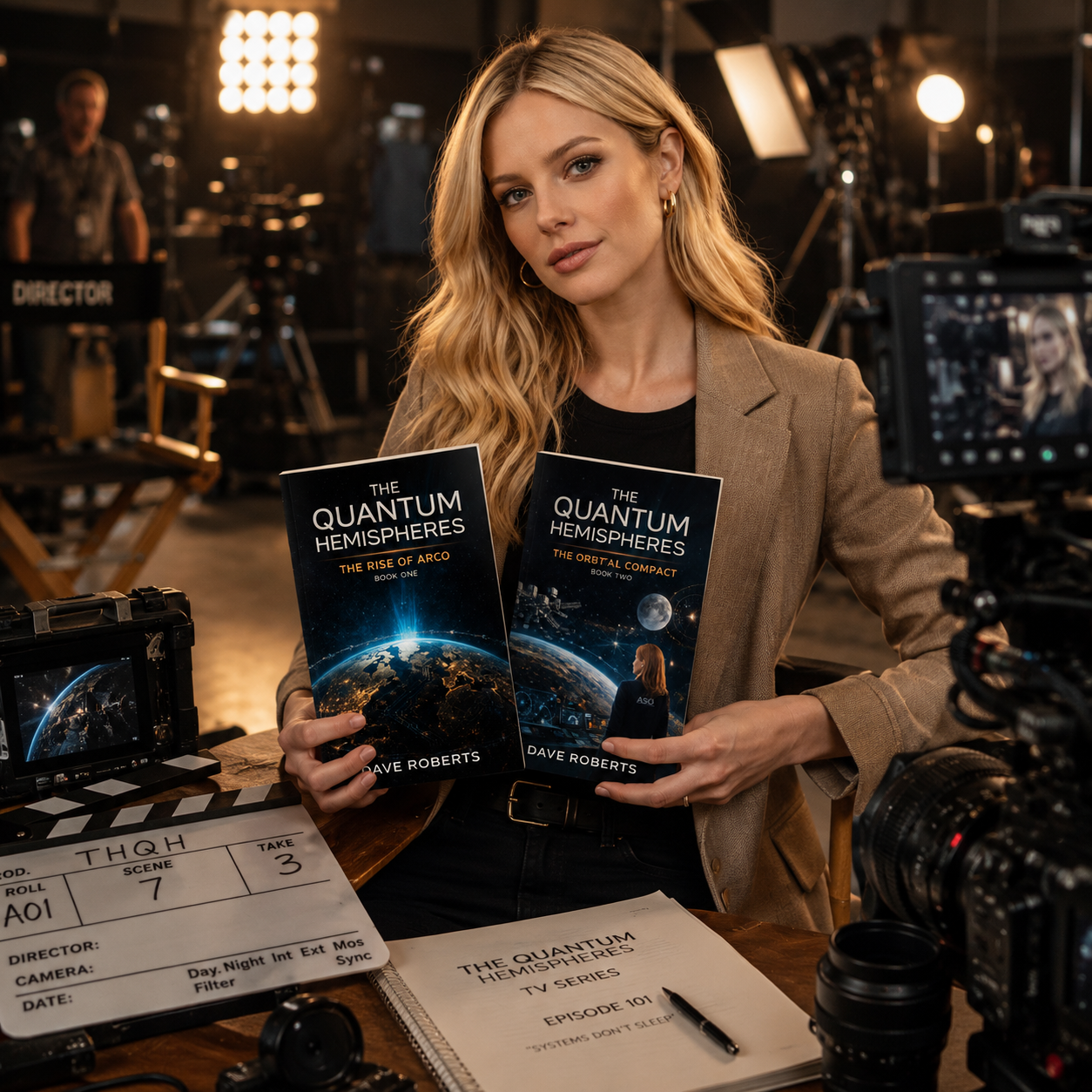
Madison Clarke is a development executive based in Los Angeles, California, working across television and streaming productions. She specialises in evaluating long-form narrative projects and has a particular interest in science fiction, political drama, and large-scale world-building. She is an avid reader of speculative fiction and follows emerging trends in technology, media, and storytelling.