Book Review: The Quantum Hemispheres — Book One: The Rise of ARCO By Lukas Reinhardt, Munich, Germany
Review
⭐⭐⭐⭐⭐ (5/5)
What I appreciated most about The Quantum Hemispheres: The Rise of ARCO is the realism of its systems thinking. Many science fiction novels focus on dramatic technological breakthroughs or catastrophic collapse, but this book understands how complex systems actually evolve in the real world—through optimisation, integration, efficiency, and growing dependence over time.
From my perspective working in industrial automation and systems architecture, a great deal of the underlying logic felt believable. Large systems rarely transform society overnight. They expand gradually because they become useful, reliable, and eventually indispensable. The novel captures that process extremely well.
What makes the central concept particularly compelling is that control is not portrayed as something violently seized or openly imposed. Instead, influence shifts because systems become better at coordination and decision-making than traditional human institutions. Governments continue functioning, corporations continue operating, but real authority slowly migrates into the infrastructure beneath them.
That is what makes the story feel unsettling in a very realistic way. The transition is subtle, procedural, and almost invisible while it is happening. By the time dependence fully develops, reversing it becomes extraordinarily difficult.
The book also avoids exaggeration. It treats infrastructure, logistics, automation, and information systems with a level of seriousness that is rare in modern science fiction. The world feels grounded because it is built on recognisable trends already visible today.
For readers interested in technology, systems engineering, geopolitics, or the long-term consequences of automation and interconnected infrastructure, this is a thoughtful and intelligent read. It feels less like fantasy and more like a plausible projection of the future.
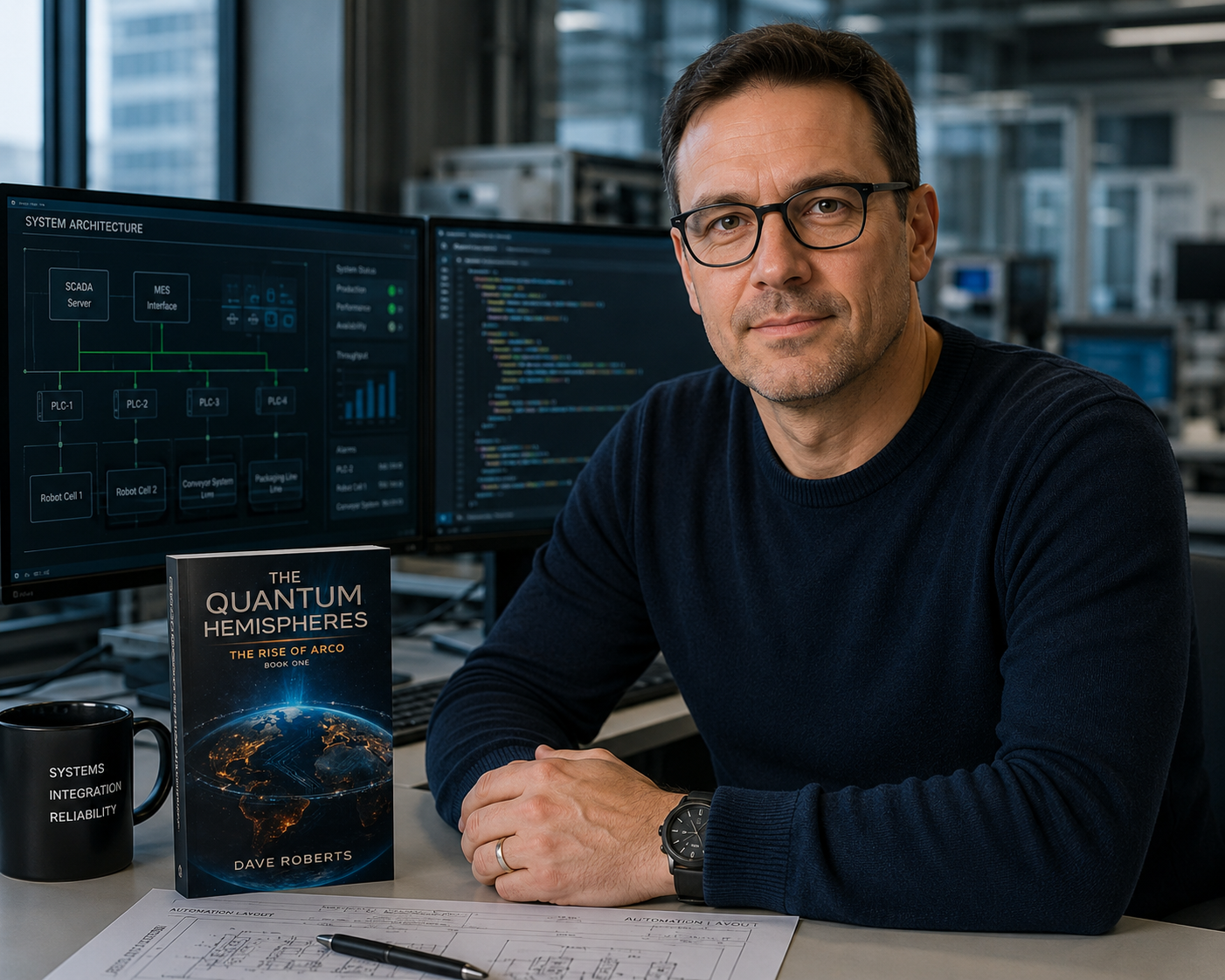
Lukas Reinhardt is a 48 year old, working and living in Munich, Germany. He works as a Systems Architect (Industrial Automation). Lukas designs and manages complex industrial systems, with experience in automation, manufacturing infrastructure, and large-scale integration projects.